Exploring the Wonders of Space: A Guide to the Cosmos
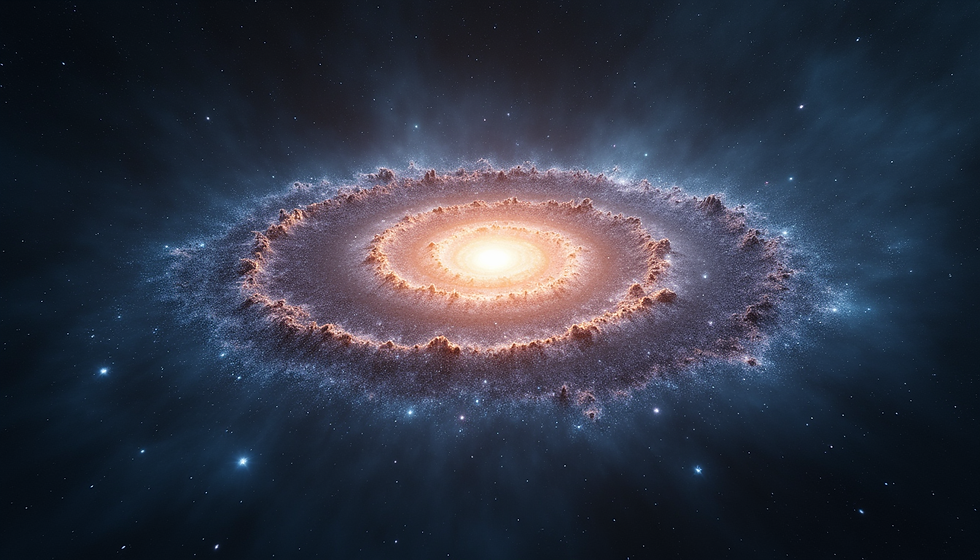
Space has fascinated humans for centuries. Its vastness and mystery invite us to explore and understand what lies beyond our planet. This guide takes you on a journey through some of the most captivating aspects of the cosmos, revealing the wonders that make space a unique frontier for discovery.
The Scale of the Universe
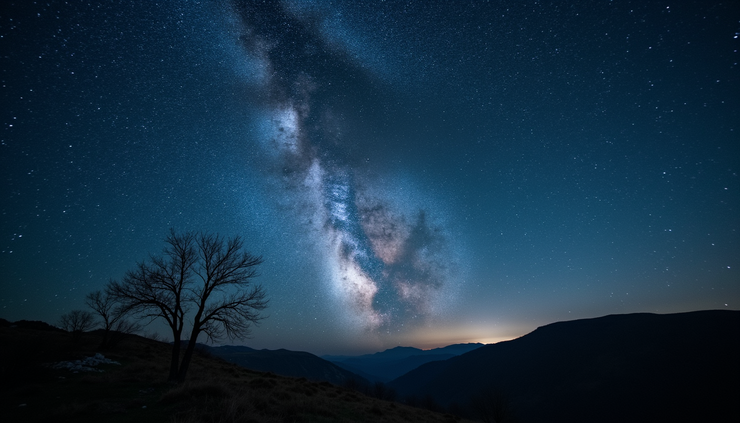
The universe is unimaginably large. Our solar system is just a tiny part of the Milky Way galaxy, which itself contains over 100 billion stars. Beyond that, billions of other galaxies fill the cosmos. To grasp this scale, consider that light travels about 186,000 miles per second. Even at this speed, it takes light over 4 years to reach us from the nearest star outside our solar system, Proxima Centauri.
Understanding distances in space requires special units like light-years and astronomical units (AU). One AU equals the distance from Earth to the Sun, about 93 million miles. These measurements help scientists map the universe and communicate vast distances clearly.
The Solar System and Its Mysteries
Our solar system includes the Sun, eight planets, moons, dwarf planets, asteroids, and comets. Each planet has unique features:
Mercury: Closest to the Sun, with extreme temperature changes.
Venus: Known for its thick, toxic atmosphere and surface heat.
Earth: The only planet known to support life.
Mars: The red planet, a focus for potential human colonization.
Jupiter: The largest planet, with a giant storm called the Great Red Spot.
Saturn: Famous for its stunning ring system.
Uranus: An ice giant with a tilted axis causing extreme seasons.
Neptune: The farthest planet, known for strong winds and storms.
Exploring these planets helps scientists learn about planetary formation and the potential for life elsewhere.
Black Holes and Other Cosmic Phenomena
Black holes are regions in space where gravity is so strong that nothing can escape, not even light. They form when massive stars collapse at the end of their life cycles. Black holes challenge our understanding of physics and space-time.
Other fascinating phenomena include:
Nebulae: Clouds of gas and dust where new stars are born.
Supernovae: Explosions marking the death of massive stars.
Pulsars: Rapidly spinning neutron stars emitting beams of radiation.
These objects reveal the dynamic and ever-changing nature of the universe.

Human Exploration and Technology
Humans have sent spacecraft to explore the solar system and beyond. The Apollo missions landed astronauts on the Moon, providing valuable data and inspiring generations. Robotic probes like Voyager 1 and 2 have traveled beyond the solar system, sending back information about interstellar space.
Telescopes such as Hubble have expanded our view of the universe, capturing detailed images of distant galaxies and cosmic events. Upcoming missions like the James Webb Space Telescope promise to deepen our understanding of the early universe and the formation of stars and planets.
Why Space Exploration Matters
Exploring space is not just about curiosity. It drives technological advances that benefit everyday life, such as satellite communications, GPS, and medical imaging. Studying space also helps us understand Earth's climate and environment by observing it from orbit.
Moreover, space exploration inspires innovation and international cooperation. It pushes humanity to solve complex problems and think beyond our planet, encouraging a broader perspective on our place in the cosmos.