Exploring the Mysteries of the Universe: Fascinating Discoveries in Astronomy
The universe holds countless secrets that continue to challenge our understanding and spark curiosity. From the tiniest particles to the vast stretches of space, astronomy reveals astonishing facts about the cosmos. This post explores some of the most fascinating discoveries that have shaped our knowledge of the universe and highlights why these findings matter to anyone interested in the stars above.
The Expanding Universe and Dark Energy
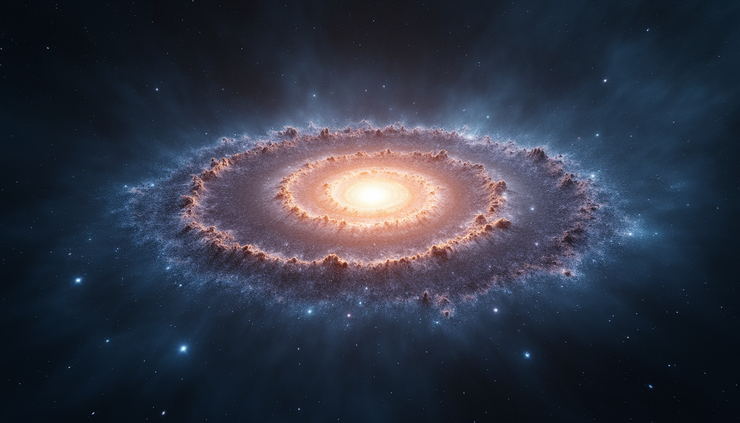
One of the most groundbreaking discoveries in astronomy came in the late 1990s when scientists observed that the universe is not just expanding but accelerating in its expansion. This unexpected finding led to the concept of dark energy, a mysterious force that pushes galaxies apart faster over time.
The expansion was first observed by measuring the redshift of distant supernovae.
Dark energy is estimated to make up about 68% of the total energy in the universe.
Understanding dark energy could explain the ultimate fate of the cosmos.
This discovery changed how scientists view the universe’s future. Instead of slowing down, the cosmos might keep expanding forever, growing colder and emptier.
Black Holes and Their Role in the Cosmos
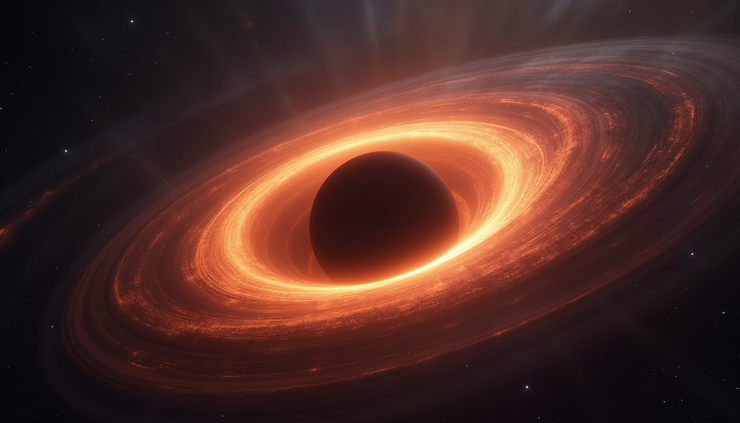
Black holes are regions in space where gravity is so strong that nothing, not even light, can escape. Once considered theoretical oddities, black holes are now recognized as key players in galaxy formation and evolution.
The Event Horizon Telescope captured the first-ever image of a black hole’s shadow in 2019.
Supermassive black holes, millions to billions of times the mass of the sun, sit at the centers of most galaxies.
Black holes influence star formation and can power energetic jets visible across vast distances.
Studying black holes helps astronomers understand extreme physics and the behavior of matter under intense gravity.
Exoplanets and the Search for Life
The discovery of planets beyond our solar system, called exoplanets, has opened new frontiers in astronomy. Thousands of exoplanets have been found orbiting other stars, some with conditions that might support life.
NASA’s Kepler mission identified over 2,600 confirmed exoplanets.
Some exoplanets lie in the “habitable zone,” where liquid water could exist.
Techniques like transit photometry and radial velocity help detect these distant worlds.
Finding Earth-like planets raises questions about how common life might be in the universe and drives missions to study atmospheres for signs of habitability.
Cosmic Microwave Background and the Big Bang
The cosmic microwave background (CMB) is the afterglow of the Big Bang, the event that created the universe about 13.8 billion years ago. This faint radiation fills the entire sky and provides a snapshot of the early universe.
The CMB was discovered accidentally in 1965 by Arno Penzias and Robert Wilson.
Detailed measurements by satellites like COBE, WMAP, and Planck have mapped tiny temperature fluctuations.
These fluctuations reveal the seeds of galaxies and large-scale structures.
Studying the CMB helps scientists test models of the universe’s origin and composition, confirming the Big Bang theory as the leading explanation.

Why These Discoveries Matter
Each of these discoveries expands our understanding of the universe and our place within it. They show how much we have learned and how much remains unknown. For anyone fascinated by the stars, these findings offer a glimpse into the vast, dynamic cosmos that surrounds us.
They inspire new questions about the nature of reality.
They drive technological advances in telescopes and space exploration.
They connect us to a larger story of cosmic evolution.